
Location:
1100 15th St NW Washington, DC 20005
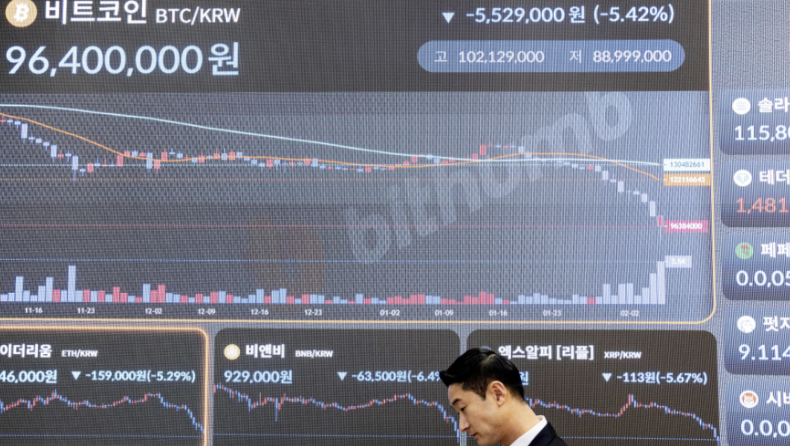
The disparate performance of Bitcoin and gold of late is noteworthy as investors seek alternatives to the U.S. dollar.
Both experienced strong runs from 2023 to 2025 amid uncertainty about inflation and increased geopolitical risks. But Bitcoin’s recent steep decline from last year’s peak erased, at one point, all of its gains since President Trump’s 2024 victory. Gold, in contrast, set new record highs.
To grasp what happened, one must first understand how bitcoins are created.
Bitcoin’s advocates contend that it is “digital gold,” because its supply is constrained by a rule that limits the total number of units to about 21 million. The number of coins mined each year is based on an algorithm that decreases the new supply by 50 percent every four years, which is called a “Bitcoin halving.” This algorithm was chosen because it approximates the rate at which commodities such as gold are mined.
The intent of these rules is to ensure that bitcoins will not be debased. When Bitcoin was launched in 2009 amid the global financial crisis, its supporters maintained that it would be a good store of value. However, it has experienced periodic selloffs since then.
Jon Quast of The Motley Fool argued that Bitcoin’s volatile trading pattern is linked to halving events. In a December 2023 article, he observed that Bitcoin experienced huge gains the year before a having, the year during one and the following year. Thereafter, it has dropped by 60 percent or more on average before rebounding.
More recently, analyst Benjamin Cowen observed that the current selloff of Bitcoin is consistent with the historical pattern of post-halving cycles. However, he noted that the latest cycle differed from previous peaks in 2017 and 2021 that were driven by widespread retail speculation. He concluded: “This cycle topped on apathy rather than euphoria,” which suggests that faith in Bitcoin and other crypto currencies may be fading.
Whether Bitcoin will recover from the latest slump is unclear. However, enthusiasts will be hard pressed to convince investors that it is as good as gold.
A key difference is that a significant part of the value investors derive from holding gold is its widespread acceptance as a means of payment for thousands of years. In comparison, Bitcoin is generally accepted for payment only for specific uses — either crypto transactions or for illicit purposes.
Another difference is that gold’s price history is less volatile than Bitcoin’s. After the link with gold and the U.S. dollar was severed in 1971, the price of gold spiked during the inflationary 1970s and in the aftermath of the 2008 financial crisis. Outside of those periods, we saw years of relatively stable gold prices.
Gold’s recent rise has been unusually fast, especially this past year. The catalyst was the freezing of Russia’s foreign currency reserves by the U.S. and European countries after it invaded Ukraine in 2022. This caused some central banks and foreign governments to pile into gold, which gave rise to talk about “de-dollarization.” Central banks currently are estimated to hold 17 percent to 20 percent of gold outstanding, and the total now exceeds their holding of U.S. treasurys.
The near-doubling in the price of gold over the last year was accompanied by increased retail demand. The World Gold Council reports that U.S. gold-backed exchange-traded funds rose to 437 tons last year, representing two thirds of all U.S. gold demand, versus less than 2 percent in 2024.
A key development was Trump’s global trade war, which caused investors to question the U.S. government’s commitment to the post-war system of international trade. It fueled a 10 percent depreciation of the dollar in the first half of 2025.
Gold received an added boost when Trump pressed the Federal Reserve to lower interest rates significantly, and he subsequently tried to fire Lisa Cook as a Federal Reserve governor. This caused investors to worry about the independence of the Fed. Thereafter, its price surged to $4,000 in early October and $5,000 in late January during a buying frenzy that has been called the “debasement trade.”
Gold’s rapid ascent was finally interrupted two weeks ago amid news that Kevin Warsh would become the next Fed chair. Investors viewed Warsh’s appointment as lessening the risk of the Fed losing its independence.
Looking ahead, the shift toward more retail buying raises the possibility that gold could be more volatile than before. Its current valuation is very high, which leaves it vulnerable to a pullback.
That said, gold has been a good store of value over the long term, and its correlation with equities is low. In this respect it is a proven alternative to the U.S. dollar, whereas Bitcoin is neither a vehicle currency nor a good store of value.