
Location:
1100 15th St NW Washington, DC 20005
The only way a U.S. attack on Iran ever made sense was is if its goal was regime change.
If the intention is, for example, to compel Iran to do a “deal” then there was no point in attacking. Under the current circumstances, no deal is worth the cost of lifting sanctions that would give an untrustworthy and demonic regime more runway with which to oppress its people and bamboozle the world.
When Iranian protesters bravely took to the streets in January, that was their goal — not an improved nuclear deal with the West. President Trump promised them that “help is on its way” but then watched a brutal crackdown that is believed to have killed many thousands
In general, a government’s evil nature does not by itself grant outside powers the right to attack it. Otherwise, geopolitics would be a permanent contest of intervention, with every government claiming license to overthrow all other governments.
There is a point, however, where the evil is too great. This is an international norm known as “the Responsibility to Protect.” It is still a problematic reason to start a war, especially since it is applied so inconsistently. The West did not attack Pol Pot, for example, and today it is not threatening North Korea.
An easier case to make is when a government has been harming other countries. That makes the case against Iran’s Islamic Republic easier to justify. Iran has for decades been funding, arming, and training proxy militias across the region that have caused stupendous harm to a swath of Middle East countries.
Hezbollah has undermined Lebanon and caused ruinous wars with Israel; it propped up the murderous Assad regime in Syria until its collapse. Iran’s Shiite militias in Iraq have made a mockery of that country’s independence. The Houthis in Yemen have taken over half the country, impeded global trade in the Suez canal, and caused almost a half million deaths. Finally, there is Hamas, which on Oct. 7 sparked a cataclysmic war with Israel that has left much of Gaza in ruins.
Trump pulled together a massive armada near Iran’s shores based on carrier groups that took weeks to arrive. But his argument during that phase for some reason focused on getting Iran to sign a deal foreswearing uranium enrichment. He went too far in demanding no enrichment, since Iran actually retains the right to civilian-level enrichment under the Nuclear Non-Proliferation Treaty. Moreover, Trump himself repeatedly claimed that Iran’s nuclear program had been “obliterated” by his action last June, even suggesting back then that no deal was necessary.
It is good that the U.S. widened its demands to include strict limits on ballistic missiles, and especially an end to the support for the proxy militias. But even then, a deal that gives the regime (at least as it was under Supreme Leader Ali Khamenei) sanctions relief is not a great idea. Freeing up billions of dollars would give the regime more runway to continue oppressing its people. And a war was always bound to entail massive risks that only a massive payoff like regime change could justify.
But to the surprise of many, once Trump made the decision to go to war, he did in fact frame it in the logic of regime change. The second surprise (though it was telegraphed) was that the war was launched in partnership with Israel.
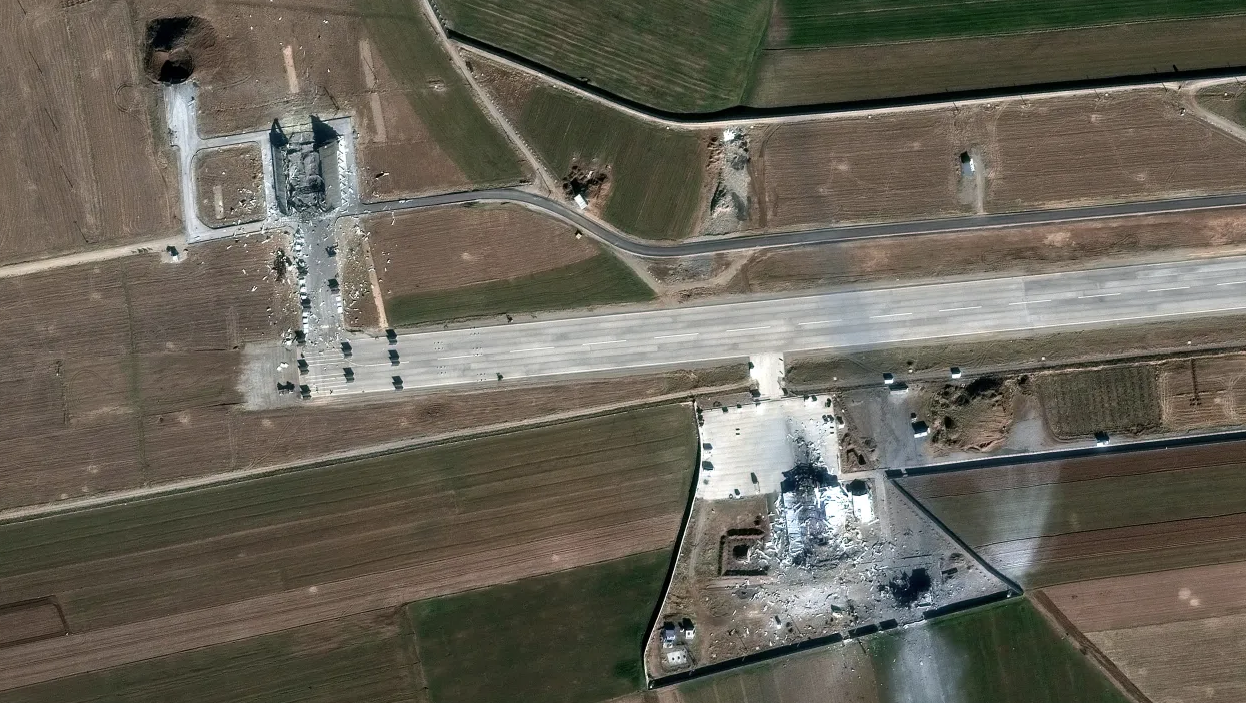
The third has been its stunning degree of success so far. In the first 24 hours — and mostly in three massive strikes in the first minutes — the attackers killed not only Khamenei but also about 40 of his top lieutenants, including the defense minister, chief advisors, and top military and Revolutionary Guard commanders.
The regime is moving quickly to appoint replacements, doubling down on the narrative that it was never about individuals but a system worth defending. But if Trump claims that what has been achieved is already a version of regime change lite, for once it will not be completely bluster. There is reason to believe that any new iteration of the regime will be more careful, more vulnerable, and less indifferent to the demands of the U.S. and the world.
One possibility now would be to go for toppling the regime altogether, and assume the risks of chaos in the country. Israel will probably push for that. But it would not be surprising to see Trump halt the war and give the new authorities a chance to show that the lesson has been learned — in short, to agree to surrender terms.
A bad scenario, meanwhile, would see Trump, having gone as far as he has, simply agree to a cap on uranium enrichment, and in exchange for some Iranian promises ease sanctions and give the regime longer life in its current form.
The regime has imposed profound hardship on its citizens while enriching loyal power centers through patronage and corruption. Women live under legal coercion in matters of dress and personal autonomy. Gays face severe persecution, and Iran remains one of the few countries where same-sex relations can carry the death penalty, sometimes enforced publicly in grotesque displays. Media is tightly constrained, dissent criminalized, and fear deeply embedded in political life. It has repeatedly massacred protestors.
There is no credible constitutional mechanism for removing the ruling structure, leaving internal upheaval or external force as the only plausible paths to systemic change – in the latter case, by trying to get the military and the IRGC to turn on the clerics.
If Trump is serious about rescuing the people of Iran, and he does agree to pause the war, he will add further conditions that will force a transition to democracy — for example, allowing all candidates to run for president, and putting parliament above the Assembly of Experts and its clerics. That would be true regime change, and one that is badly needed.